Zackaria Farhat on Telecom’s Autonomous Future
Telecom is shifting from scale to intelligence, where networks are expected to think, adapt, and optimize themselves. Zackaria Farhat, Managing Partner and Strategy Lead at Makman Technology Consulting, shares how operators can move beyond legacy complexity toward real impact through automation, AI-driven optimization, and the foundations of autonomous infrastructure across MEA markets.
Q: How does Makman’s specialized approach allow you to deliver more tailored value to Tier-1 operators compared to larger global firms?
What we know about Tier-1 CSP operators is that they’re very good at big transformation programs, and very good at governance. What we do at Makman Technology Consulting is help them operationalize their strategy; especially their autonomy strategy.
Makman is a niche consultancy specialized in TM Forum standards and autonomy. We help identify the high-value scenarios and quick wins CSP operators need in order to operationalize their autonomy transformation.
Q: What are the top two technological trends currently driving the most significant investments among your telecom clients in the Middle East and Africa?
What we see most CSP operators focusing on is how to move from a use-case mentality to a platform mentality, and how to invest in technologies that uplift all of their use cases at once, rather than in isolation.
So the investment is going mostly into two areas: real-time data streaming and telemetry, and intent-based orchestration between agents. These are the kinds of investments that lift the entire platform, and by extension, all use cases simultaneously, instead of funding isolated solutions.
Q: In your consulting practice, you focus heavily on value-driven outcomes. Could you share a key metric that demonstrates how Makman successfully optimizes operational costs for a telecom operator?
To answer this, we first need to define autonomy, because it’s very different from automation. Automation is about improving the task; its unit of measure is the task itself. Autonomy is about the delegation of responsibility.
So to deliver value, we focus on reducing the handshakes and handovers between people and systems. The more we can delegate to the system – and at what level, scope, and capability – the more value we know has been delivered. To measure this, we use TM Forum’s VOF and VIF frameworks, which have proven very effective at isolating the difference between capability and value.
Q: Which specific areas of a telecom organization’s infrastructure does management find most critical to address first when aiming for full network autonomy?
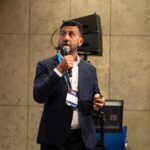
Let’s say you’re a Tier-2 or Tier-3 operator, still largely in manual or assisted automation. What we find is that you need to focus on the foundations first, and that’s not a technology or technical capability, and it’s not even AI. It’s your data: the data lifecycle, data quality, and also your operations and people.
The caveat is that you can’t invest in these foundational things *before* you invest in technology; they need to happen in parallel, with technology going in first. Once the technology is there, the people and processes can adapt to it, and you can uplift them as well.
(Interview conducted with Zackaria Farhat, Managing Partner and Strategy Lead, Makman Technology Consulting. Click on the following link to watch the full interview of Makman’s Zackaria Farhat on Telecom Intelligence.)