Autonomous Networks (AN) Upskilling Hub
The telecom industry has made significant progress in defining Autonomous Networks. AI-native operations, closed-loop automation, and Level 3/ Level 4 maturity are now well understood.
But there is a structural issue the industry has not yet solved: the ability to scale skills at the same pace as technology.
As highlighted by Shuvo Saha (VP Education, TM Forum) during Innovate Asia 2025, learning across the telecom ecosystem is not happening at the speed, scale, or consistency required to make Autonomous Networks a reality.
Autonomous Networks require mastery of so many elements: AN levels and evaluation, reference implementations, Al-native architectures, closed loops, ANLET, high-value scenarios, data management, intent modeling, and more. No one organization — not even the biggest vendors — has all that knowledge on its own or can realistically centralize or distribute this knowledge fast enough.
A Model That Reflects How the Industry Actually Operates
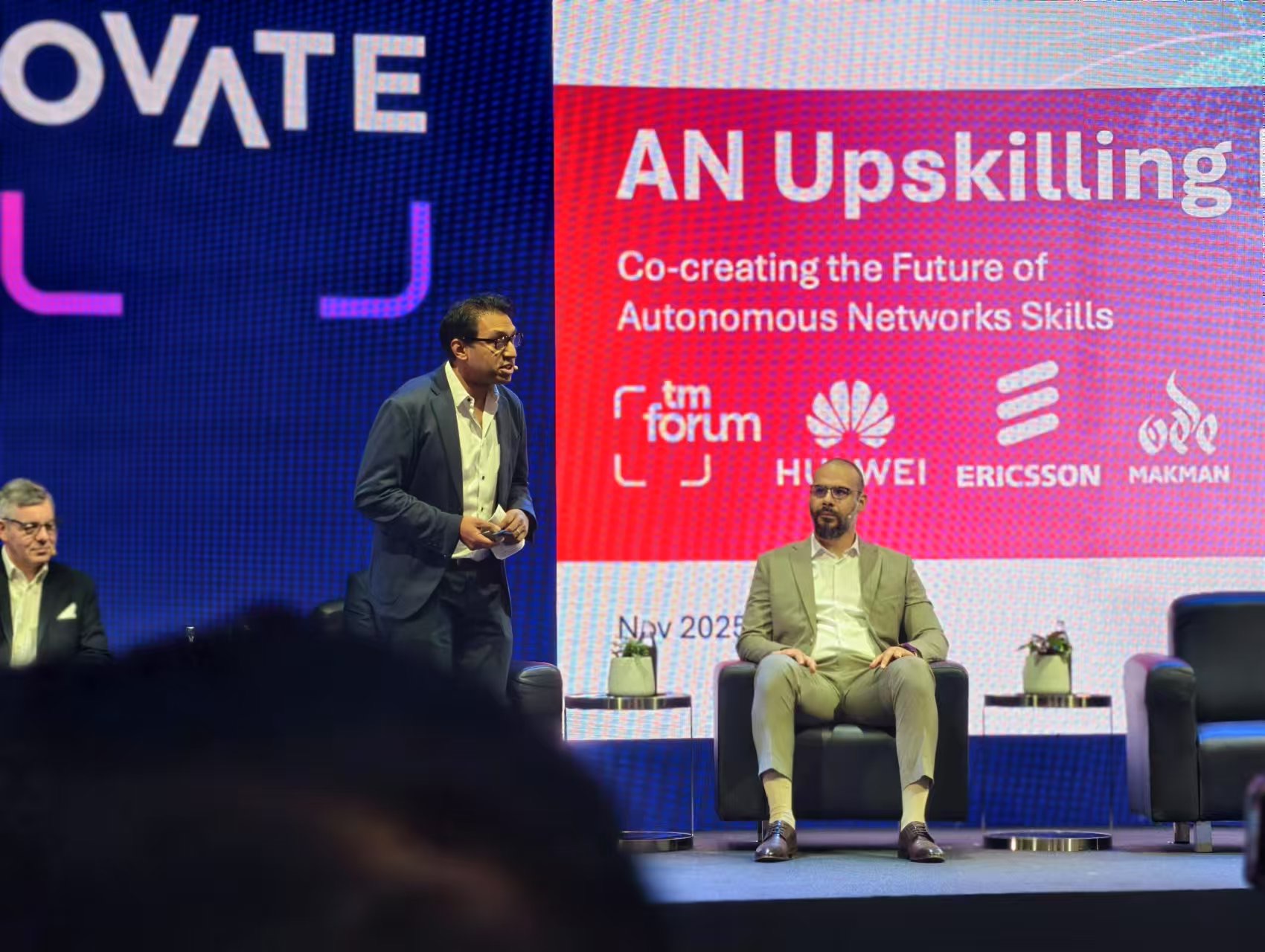 The AN Upskilling Hub represents a deliberate move toward a more realistic model of capability development. Built through collaboration between the founding members of the Hub: Huawei and Ericsson (as technology vendors), Makman Technology Consulting (as a specialist integrator), and TM Forum (a vendor-agnostic standards and certification body), it introduces a blended approach to learning aligned with real-world deployment environments. And as the hub matures, more partners will be invited to join.
The reality is straightforward: Autonomous Networks are not built in isolation. They are delivered across multi-vendor ecosystems, shaped by cross-company collaboration, and dependent on shared frameworks, common language, and aligned benchmarks. The structure of the Hub reflects this.
A vendor-neutral foundation, led by the TM Forum, provides the baseline: standardized frameworks, consistent terminology, and industry-recognized certifications. On the other hand, partners contribute applied expertise through hands-on training, implementation experience, and domain-specific depth.
This combination addresses a long-standing gap. Industry alignment without execution depth lacks impact, while vendor-specific training without a shared foundation creates fragmentation. The Hub is designed to reconcile both.
From Learning to Capability
The central issue is not knowledge availability, it is capability transformation.
As organizations move from Level 2 toward Level 4 autonomy, the change is not limited to systems. Roles evolve, decision-making becomes more data-driven, and new competencies emerge around AI-enabled operations and orchestration. In many cases, this is where progress slows, not because the technology is immature, but because the organization is not yet equipped to operationalize it.
By combining industry-standard learning with real-world application, the Hub creates the conditions for capability to develop at scale. Its success, however, will depend on how effectively learning translates into execution, how well knowledge is retained, applied, and embedded into operational workflows.
If Autonomous Networks are to move from ambition to implementation, the industry must invest as deliberately in capability building as it has in technology.
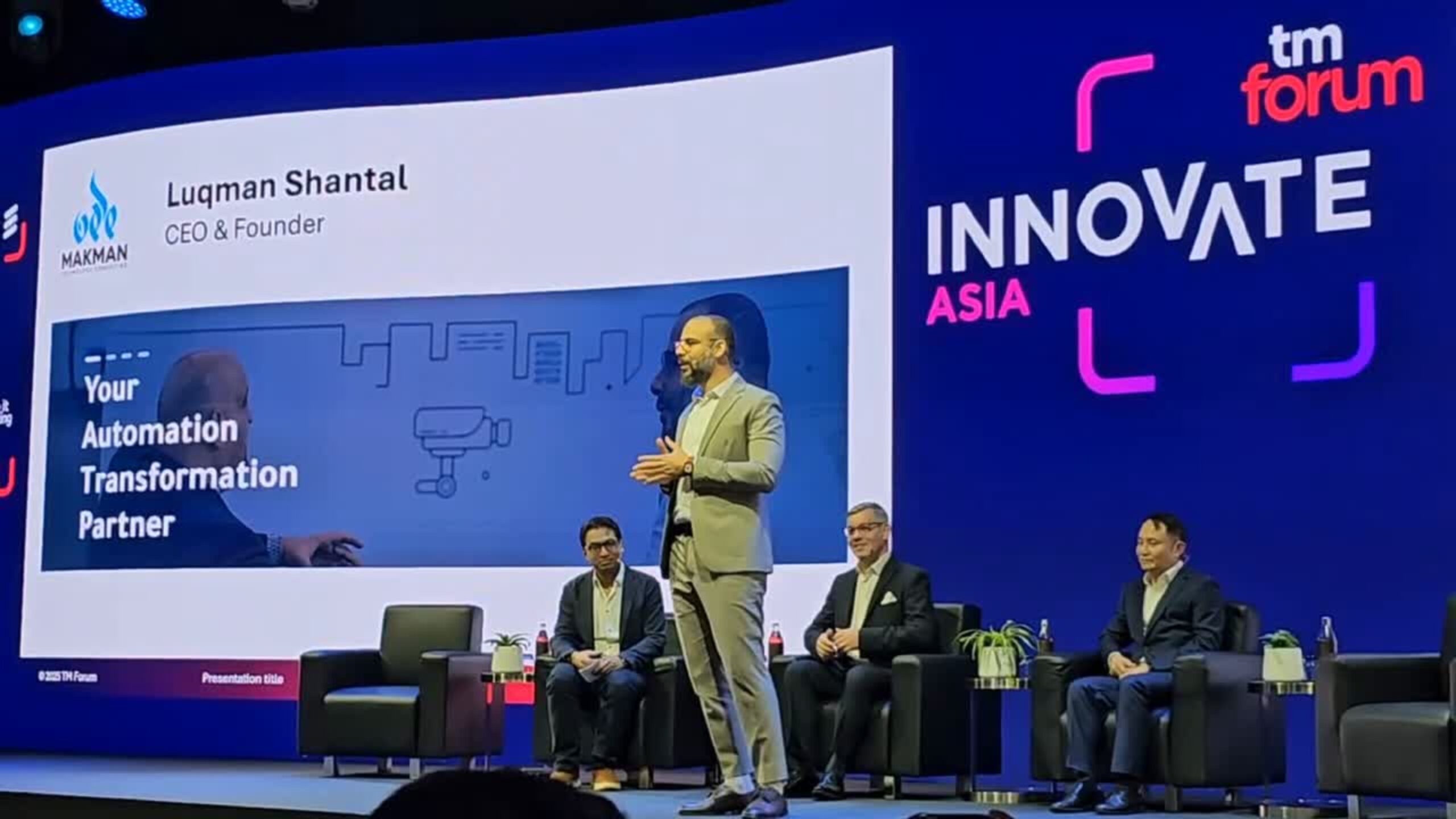
Makman works directly with telecoms who are trying to operationalize Autonomous Networks. And what we see every day is that AN maturity is fundamentally a people journey. As organizations move from Level 2 to 3 to 4, roles change. Teams change. Skillsets change. Decision-making changes. We’ve been mapping how the AN workforce evolves and what new competencies are required at each stage of autonomy. This perspective is quite different from vendor-specific training but perfectly complementary to it. Our goal through the AN Upskilling Hub is to make sure the industry doesn’t just learn the technology; it learns how to change the way it works. We’re excited to help shape the real-world, practitioner-focused part of this collaboration. — Luqman Shantal (CEO, Makman Technology Consulting).